Cyberbullies, Cyberactivists, Cyberpredators: Film, TV, and Internet Stereotypes by Lauren Rosewarne
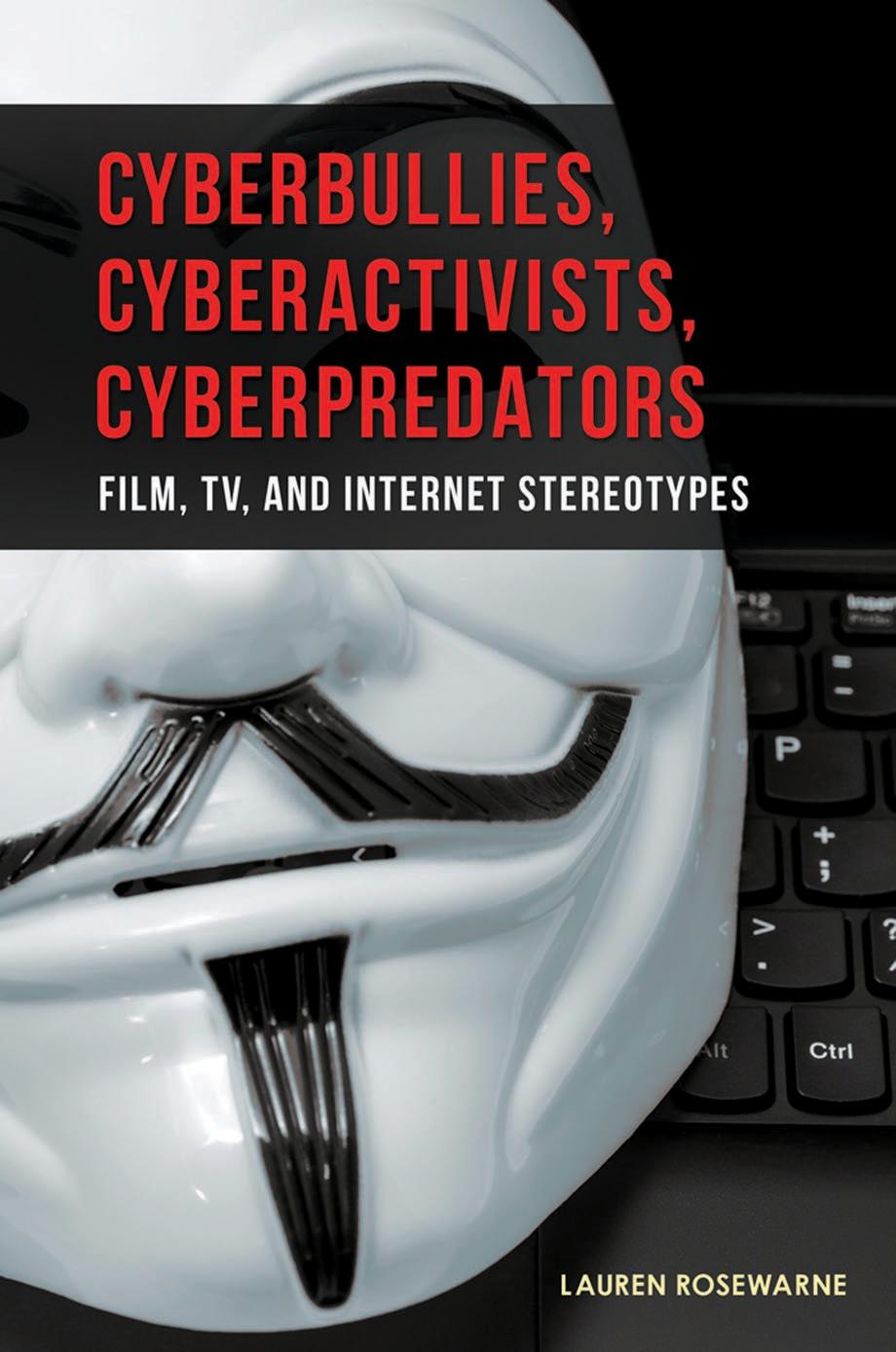
Author:Lauren Rosewarne [Rosewarne, Lauren]
Language: eng
Format: epub, azw3, pdf
Publisher: ABC-CLIO
Published: 2016-01-30T23:00:00+00:00
Peter:
These [e-mails] are quite explicit. Doesn’t sync with a librarian from the Sheboygan Conservatory of Music.
Brian:
Some people feel liberated from their normal self when they adopt an Internet persona. In the anonymity of cyberspace people are free to experiment. Online I’ve changed my name, my appearance, sexual orientation. Even gender.
Peter:
That’s more personal information than I need, Brian.
The same point was made in the horror film Strangeland (1998) when Angela (Amy Smart) outlined some of the appeal of the Internet: “I don’t have to be me. I mean, sometimes I pretend I’m some goody two-shoes prom queen and then I can change my online name and become hellraising b-girl.” In Catfish, Angela—rather than being the glamourpuss Nev had been led to believe he would be meeting—turned out to be a frumpy housewife. Angela deployed her online identity to, seemingly, escape her life of caring for two intellectually disabled boys: “A lot of the personalities that came out were just fragments of myself. Fragments of things I used to be, wanted to be, never could be,” she explained.
While different selves can be a way of playing with identity, it can also be a means of broadening one’s appeal in the online dating market. In Must Love Dogs, for example, Dolly (Stockard Channing) explained her dating strategy to Sarah:
Dolly:
You’re on this, aren’t you?
Download
Cyberbullies, Cyberactivists, Cyberpredators: Film, TV, and Internet Stereotypes by Lauren Rosewarne.azw3
Cyberbullies, Cyberactivists, Cyberpredators: Film, TV, and Internet Stereotypes by Lauren Rosewarne.pdf
This site does not store any files on its server. We only index and link to content provided by other sites. Please contact the content providers to delete copyright contents if any and email us, we'll remove relevant links or contents immediately.
Cecilia; Or, Memoirs of an Heiress — Volume 1 by Fanny Burney(32558)
The Great Music City by Andrea Baker(32019)
Cecilia; Or, Memoirs of an Heiress — Volume 2 by Fanny Burney(31956)
Cecilia; Or, Memoirs of an Heiress — Volume 3 by Fanny Burney(31942)
We're Going to Need More Wine by Gabrielle Union(19046)
All the Missing Girls by Megan Miranda(16030)
Pimp by Iceberg Slim(14508)
For the Love of Europe by Rick Steves(14121)
Bombshells: Glamour Girls of a Lifetime by Sullivan Steve(14077)
Talking to Strangers by Malcolm Gladwell(13370)
Norse Mythology by Gaiman Neil(13367)
Fifty Shades Freed by E L James(13243)
Mindhunter: Inside the FBI's Elite Serial Crime Unit by John E. Douglas & Mark Olshaker(9344)
Crazy Rich Asians by Kevin Kwan(9292)
The Lost Art of Listening by Michael P. Nichols(7506)
Enlightenment Now: The Case for Reason, Science, Humanism, and Progress by Steven Pinker(7314)
The Four Agreements by Don Miguel Ruiz(6765)
Bad Blood by John Carreyrou(6622)
Weapons of Math Destruction by Cathy O'Neil(6281)
